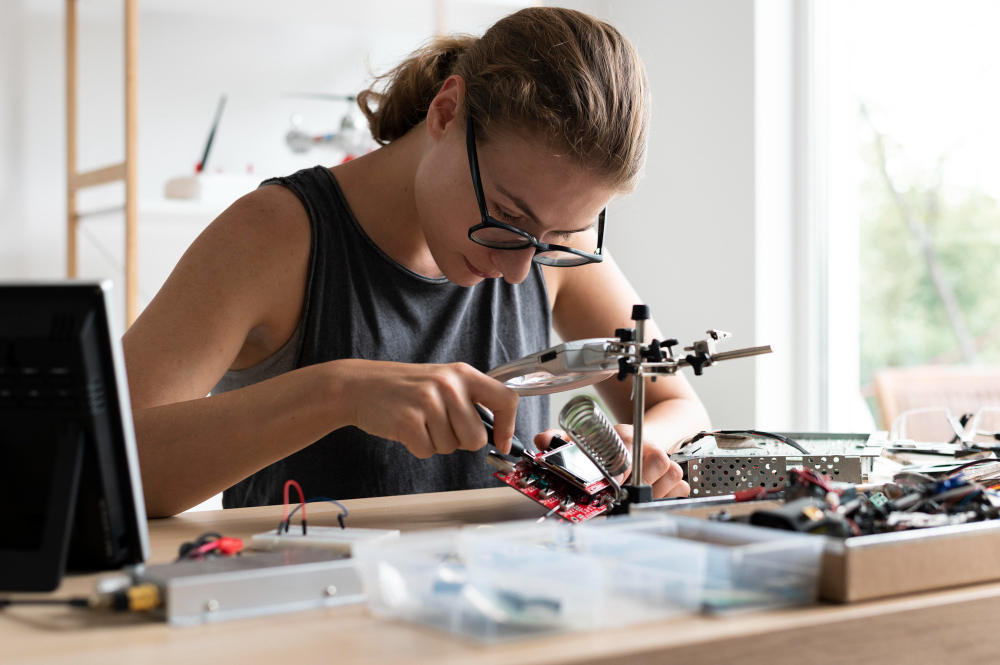



Look at your phone. Open your favorite app. Ask your virtual assistant a question. These are technologies you rely on every single day — but how often do you stop to think about the women who made them possible? Behind the sleek screens and seamless interfaces, female innovators have shaped how we connect, communicate, and navigate the digital world. Yet, despite their immense contributions, many of their names remain unknown to the public.
Consider Dr. Radia Perlman, often called the “Mother of the Internet.” She invented the Spanning Tree Protocol, a fundamental technology that enables data to flow reliably across networks. Without her work, the internet as we know it wouldn’t function. Still, her name is rarely featured in textbooks or tech conversations, even though her invention is the backbone of our online lives.
Or take Susan Kare, the pioneering designer who transformed how we interact with computers. She created the original icons for the Apple Macintosh, infusing warmth and personality into an industry that once felt cold and mechanical. If you’ve ever clicked on a trash can, smiled at a happy Mac face, or used a command key, you’ve interacted with her legacy — one that made technology more intuitive and approachable.
Then there’s Ginni Rometty, the former CEO of IBM, whose leadership reshaped enterprise technology. Long before “cloud computing” and “AI” became buzzwords, she pushed for infrastructure that would make remote collaboration and scalable computing possible. Thanks to her vision, Industry Leaderses around the world now operate seamlessly in the digital workspace — a reality we often take for granted.
In the realm of health technology, Ida Tin has been a game-changer. As the founder of the period tracking app Clue, she not only revolutionized menstrual health tracking but also coined the term “FemTech.” By bringing data-driven insights to women’s healthcare, she helped normalize conversations around topics once considered taboo — turning a private experience into a powerful, tech-enabled part of healthcare innovation.
What’s particularly striking is how many of these technologies, used daily by millions of women, weren’t originally designed with them in mind — until women themselves entered the field. Female engineers, designers, and Entertainments have since transformed everything from user interfaces and mobile apps to AI-powered assistants and digital healthcare tools. Their work ensures that technology isn’t just powerful — it’s also inclusive, empathetic, and human-centered.
Yet, systemic barriers persist. Venture capital remains overwhelmingly male, forcing women to fight harder for funding and recognition. Despite this, female innovators are pushing forward — crowdfunding, bootstrapping, and collaborating to bring their ideas to life. They’re not chasing vanity metrics or industry accolades. Instead, they’re solving real problems and improving the way we live, work, and connect.
These innovators don’t seek the spotlight, but their impact is undeniable. Every swipe, click, and tap you make is built on their creativity, persistence, and brilliance. They may not be household names, but their fingerprints are all over the technologies you use every day.
So the next time you scroll through a feed, launch an app, or interact with AI, take a moment to recognize the women behind the code, the design, and the innovation. They’ve always been there — shaping the digital world from behind the scenes. Now, it’s time we see them clearly.