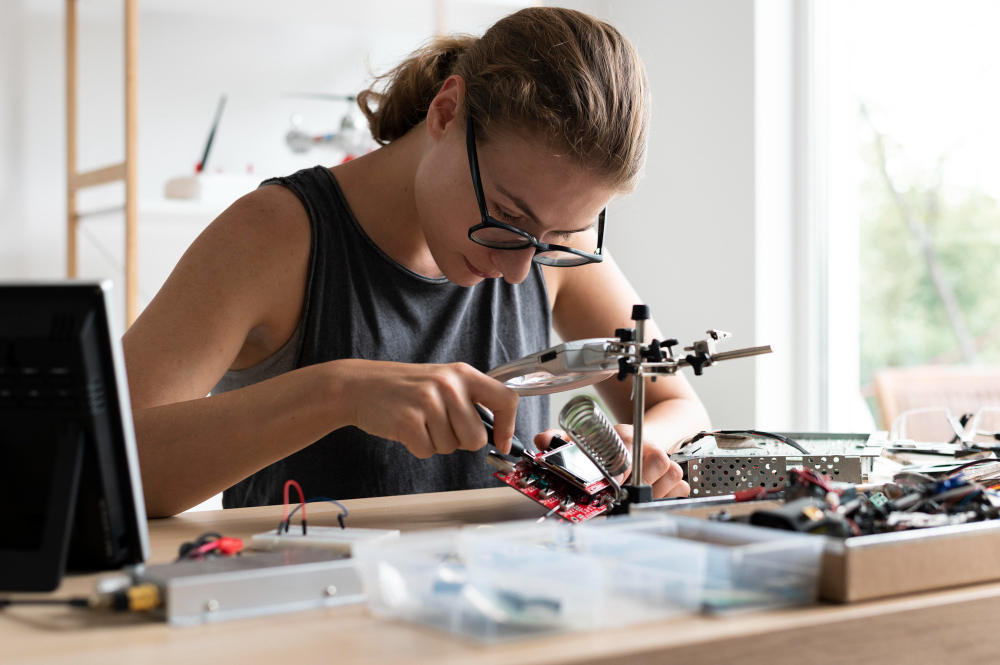


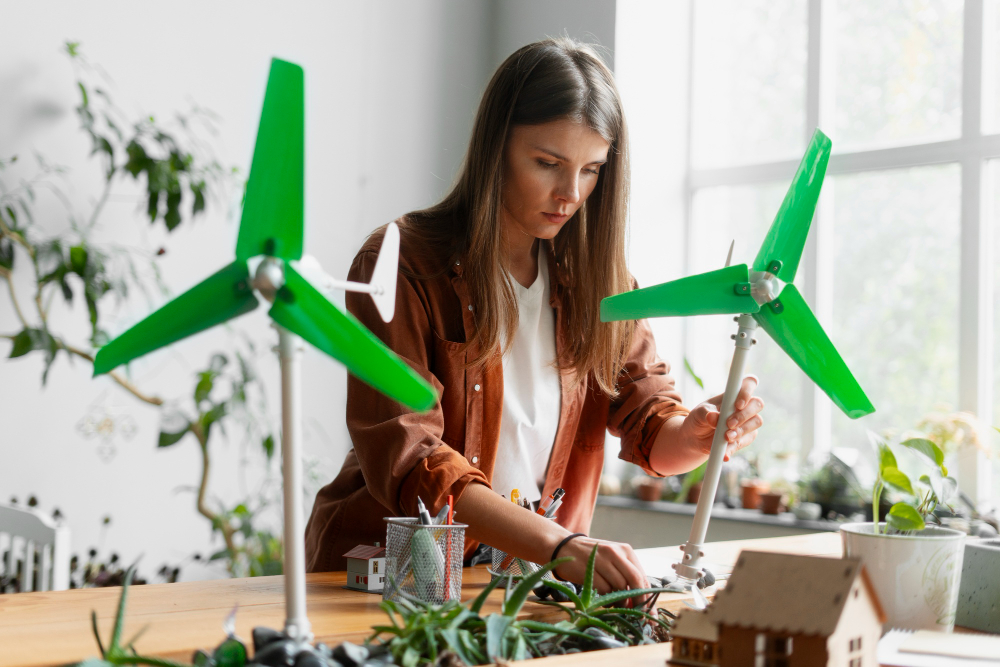
Sustainability is no longer a trend or a corporate checkbox — it’s the future. And in that future, women are not just participating; they’re leading the charge. Around the world, female scientists, engineers, and innovators are designing smarter, cleaner, and more sustainable solutions that put the planet first. From biodegradable materials to renewable energy systems, they are reshaping the landscape of technology to directly address climate change and its complex challenges.
One remarkable leader is Dr. Ayana Elizabeth Johnson, a marine biologist and climate policy expert who co-founded Urban Ocean Lab, a think tank focused on developing climate solutions for coastal cities. Her work sits at the powerful intersection of science, policy, and equity — advocating for ocean-based strategies that prioritize marginalized communities disproportionately affected by the climate crisis. Johnson’s approach highlights a crucial truth: climate change does not impact everyone equally, and equitable solutions must reflect that reality.
In China, Xiaoyuan “Charlene” Ren is tackling another urgent environmental challenge: access to clean water. As the founder of MyH2O, she leads a data-driven initiative that maps groundwater contamination across rural regions and connects villages with safe drinking water solutions. Ren’s model is simple but transformative — using community-focused, low-cost technology to drive real change without waiting for bureaucratic action. It’s innovation designed to meet people where they are, solving problems that traditional systems often ignore.
Meanwhile, in the realm of green chemistry, Dr. Jennifer Holmgren is redefining how we view carbon emissions. As the CEO of LanzaTech, she has pioneered technology that captures industrial carbon emissions and transforms them into usable fuels and chemicals. Under her leadership, global companies like Unilever and Zara are leveraging this breakthrough to shrink their carbon footprints. Holmgren’s work proves that carbon isn’t just a pollutant — it’s a valuable resource when harnessed intelligently.
Innovation is also happening at the molecular level. At Sunthetics, co-founders Myriam Sbeiti and Daniela Blanco are using artificial intelligence to revolutionize chemical manufacturing. Their technology reduces waste, cuts energy consumption, and optimizes production with unparalleled precision. This kind of behind-the-scenes transformation is critical for building truly sustainable industrial systems — and it’s led by women who are rethinking how technology operates at its core.
Collectively, these women are not just fighting climate change; they’re rewriting the very foundation of how technology is built, deployed, and scaled. They understand that solving the environmental crisis requires more than innovation — it demands a fundamental shift away from extractive models toward circular systems, regenerative design, and solutions that are as inclusive as they are impactful.
Yet despite their groundbreaking work, challenges persist. Female-led climate tech startups still receive only a fraction of venture capital funding, and many of the brightest minds in environmental science remain underrecognized. Structural biases continue to limit access to resources, networks, and visibility — obstacles that these leaders overcome daily with resilience and creativity.
Still, they persist — and they thrive. These innovators are building ecosystems, not empires. They are forging global collaborations, merging science with activism, and proving that environmental technology is not just about innovation — it’s about survival. Their work underscores a vital truth: the planet doesn’t need a single hero. It needs systems, action, and visionary leadership.
And right now, some of the most powerful, effective, and inspiring climate solutions are being created by women — pioneers whose work is shaping a cleaner, more sustainable future for us all.